What is PTC Creo? a deep dive into the world-class 3D CAD software for engineers
In the highly competitive world of product design, PTC Creo is one of well-known CAD (Computer-Aided Design) software solutions that is widely recognized and trusted. Developed by PTC Inc. in the United States, this software has become a global standard in the engineering community. This article will explore why PTC Creo is widely accepted as a world-class tool, and how it accelerates product development while ensuring maximum efficiency.
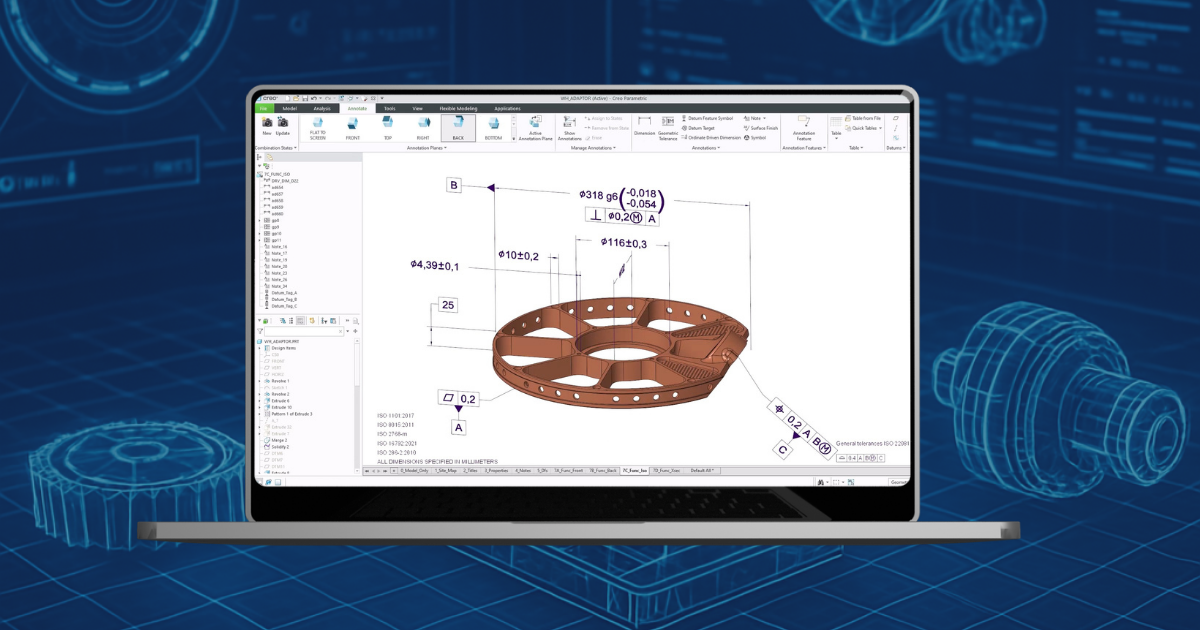
The origins of innovation: from Pro/ENGINEER to PTC Creo
Many of you may be familiar with Pro/ENGINEER, PTC’s first CAD solution, which was the industry’s first parametric, feature-based solid modeling software.
Over time, PTC evolved this software, rebranding it as Creo. Building upon the foundations of Pro/ENGINEER, CoCreate, and ProductView, Creo was designed to fully support the digital era, focusing on ease of use and enhanced efficiency in design work.
Key features of PTC Creo
1. Generative design
Creo uses Artificial Intelligence (AI) technology to automatically create the most optimal design configurations based on predefined conditions and requirements set by the user, such as materials, manufacturing processes, weight constraints, strength, or cost requirements. Generative Design helps produce high-quality, low-cost, and manufacturable solutions, benefiting not only the engineering and manufacturing processes but also service and maintenance aspects.
2. Computer-aided manufacturing (CAM)
Creo’s CAM tools are designed to enhance the manufacturing process. It supports CNC programming, toolpath optimization, mold design, and provides a comprehensive workflow for Additive Manufacturing tasks. These features streamline the manufacturing process, improving efficiency and precision.
3. Additive manufacturing
Additive Manufacturing (AM) is a production process where material is added layer by layer based on a digital 3D CAD model. Creo’s advanced Additive Manufacturing capabilities help reduce time to market, lower production costs, and effectively control development expenses, all while enabling efficient and flexible manufacturing processes.
4. Simulation and analysis
Creo Simulation is specifically designed for engineers, offering capabilities for structural, thermal, and vibration analysis. With Finite Element Analysis (FEA) tools, Creo supports simulations and analyses at multiple levels: basic, real-time, and high-fidelity. This flexibility allows engineers to choose the best solution for their specific needs, reducing the costs of physical prototyping and improving the durability, reliability, and safety of products.
Why leading industries choose PTC Creo
1. End-to-end solution
Creo is a comprehensive platform that supports the entire product development process, from concept design and engineering design to actual manufacturing. It helps eliminate redundancies, increases accuracy, and enhances organizational efficiency, ensuring smooth workflows across all stages of product development.
2. Flexible and scalable
Whether you’re a growing small business or a large multinational corporation, Creo is built to support long-term growth and scalability. It adapts to your needs, making it suitable for organizations of all sizes.
3. World-class support
Users can rely on expert support and a global network and community of users, offering guidance, knowledge sharing, and professional troubleshooting. This ensures that your business operates with confidence and stays ahead of the competition.
Summary: Elevating design to global standards with PTC Creo
PTC Creo is a comprehensive 3D CAD platform that integrates design, simulation, and manufacturing into a single system, enabling your organization to develop products more quickly, accurately, and cost-effectively. With advanced technologies like Generative Design, Simulation, Additive Manufacturing, and more, using PTC Creo is not just about having a typical CAD software. It’s about leveraging world-class technology to enhance innovation, reduce time-to-market, and improve product quality through precise simulations.